

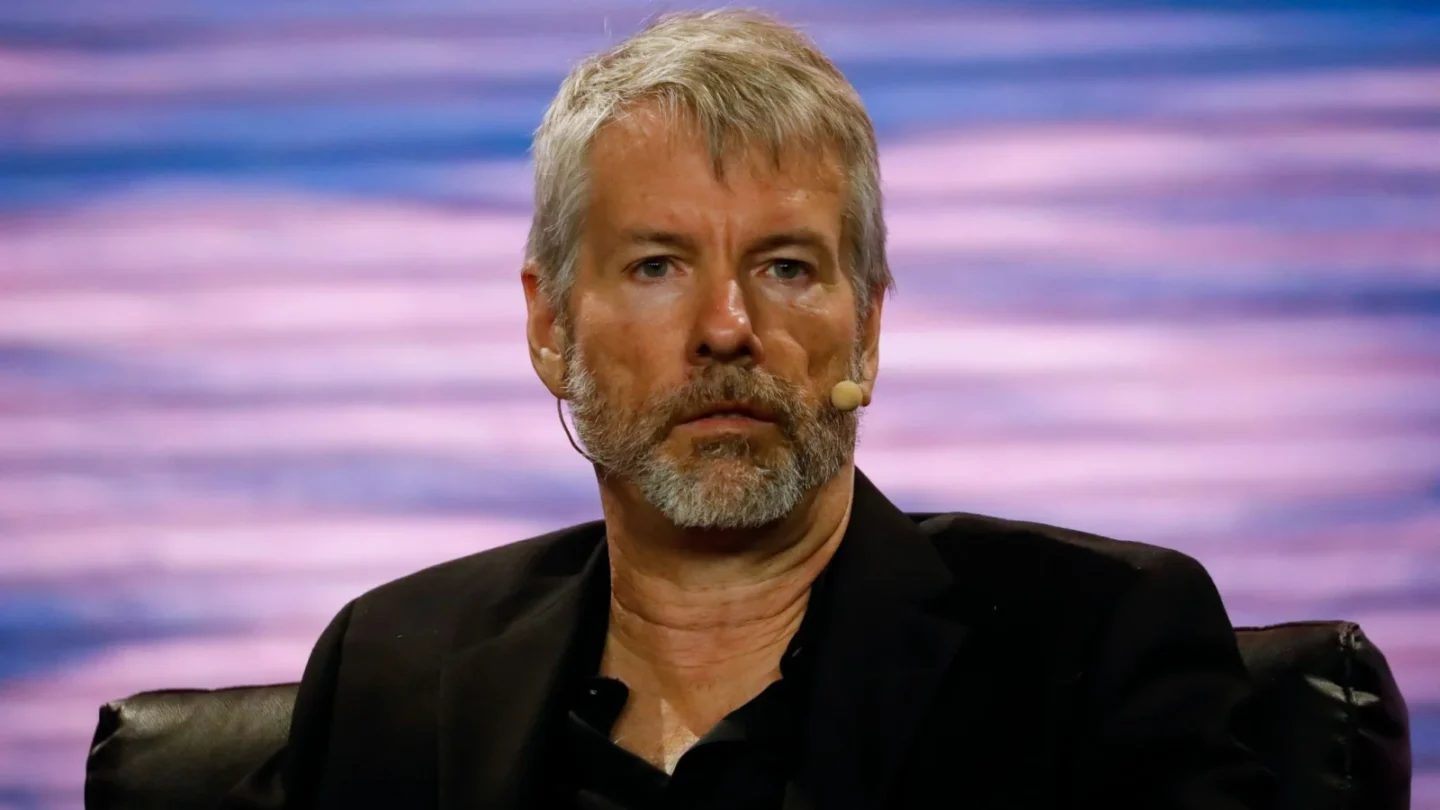
Digital asset rights served as the focal point of Michael Saylor’s policy presentation at the Bitcoin Policy Institute’s Freedom Tech DC summit, where he discussed a framework centered on five core freedoms with Conner Brown.
According to Saylor, this framework includes the individual and corporate right to create, issue, custody, transfer, and use digital assets. He noted that an increasingly productive, AI-driven economy requires improved forms of money and capital markets to ensure financial access scales alongside artificial intelligence outputs.
Five Freedoms Anchor the Policy Framework
Centering his proposal on the idea that rights belong to both individuals and corporations, Saylor stated, “Freedom starts with the ability to act.” Each of the five freedoms fulfills a specific function, ranging from the creation of new financial instruments to spending and borrowing against existing holdings.
The model additionally advocates for financing structures designed to foster business formation. Saylor outlined an objective to empower 10 million new enterprises to raise capital using digital tokens.
Saylor set a goal of enabling 10 million new companies to raise capital through digital tokens.
— Michael Saylor (@saylor) September 26, 2026
He characterized existing issuance regulations as excessively expensive and complicated for entrepreneurs lacking substantial legal budgets. Reducing these expenses, he argued, would enable a greater number of founders to connect directly with investors.
The conversation additionally addressed competition among digital dollar providers. Saylor contended that banks, fintech firms, and tech platforms ought to have an unambiguous route to delivering dollar-backed digital offerings, and suggested that issuers should be allowed to compete based on yield. In his view, constraints favoring institutions that pay minimal interest are counterproductive.
Short FAQs
What are the five digital asset rights proposed by Michael Saylor?
The five core rights are the freedom to create, issue, custody, transfer, and use digital assets.
What is Saylor’s goal for business financing?
He aims to finance 10 million new companies through faster digital token issuance and reduced regulatory costs.
How does AI factor into Saylor’s economic outlook?
He argues that growth in artificial intelligence output must be matched by improvements in financial access, money, and capital markets.
What role does Saylor envision for banks regarding Bitcoin?
Saylor urges banks to custody Bitcoin and extend credit against it under clearer capital rules.